


DUAL INHERITANCE THEORY N° 7
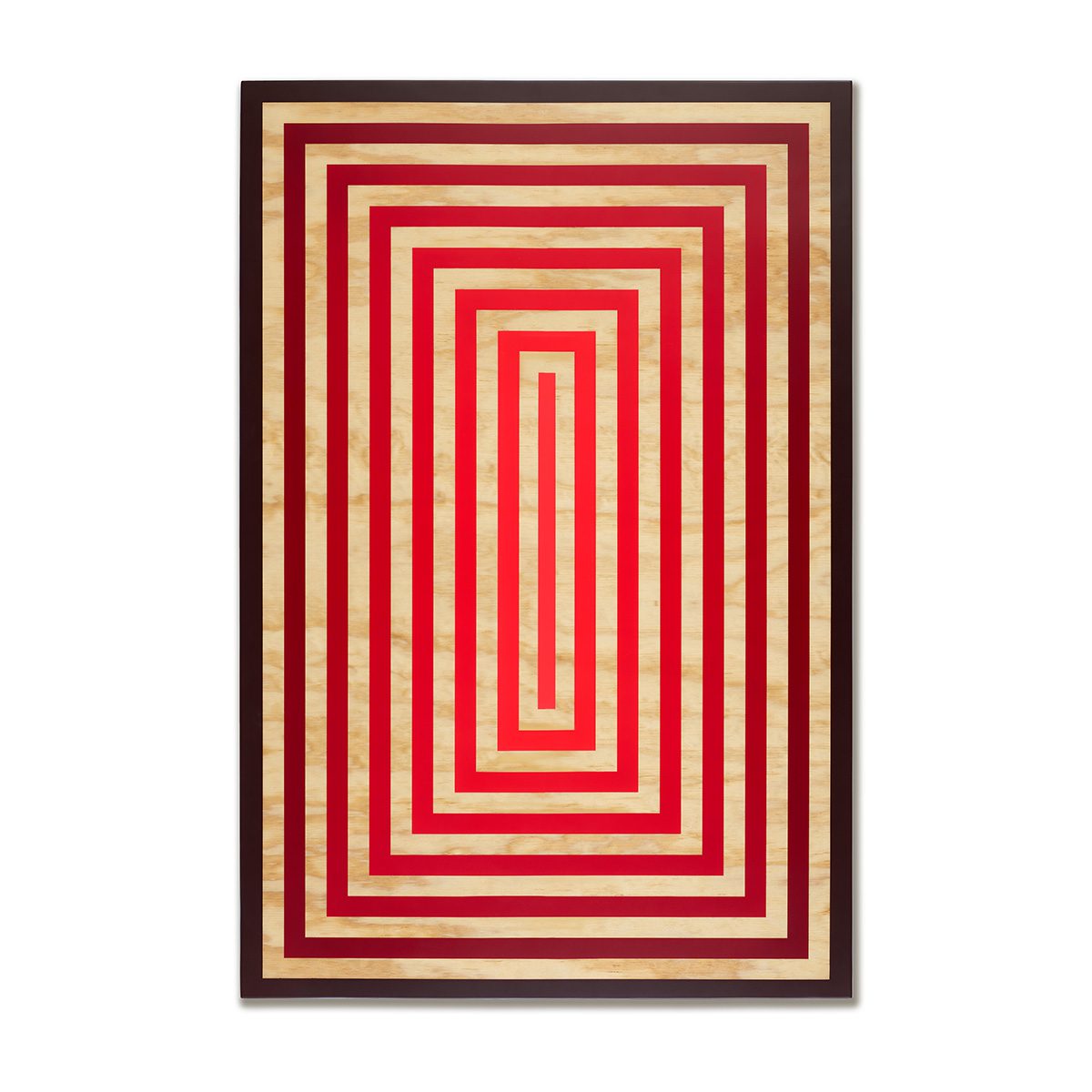
La maîtrise de l’aléatoire par la symétrie et autres astuces anxiolytiques : Dual Inheritance Theory N° 7
2026
Lacquered maritime pine wood
120 x 80 x 4 cm I 47 ¼ x 31 ½ x 1 ⅝ in
Download a comprehensive PDF on this artwork
With the Dual Inheritance Theory series, Philippe Cramer explores the coexistence—and at times the tension—between structures generated by nature and those constructed by human culture. Crafted from lacquered maritime pine, the works bring together two contrasting visual systems: the expressive, unpredictable grain of the wood and rigorous geometric compositions inspired by the language of Op Art and geometric abstraction.
The title borrows from an anthropological concept suggesting that human beings inherit simultaneously through biology and culture. In Philippe Cramer’s work, this idea becomes both a visual and material principle. The natural grain of the wood embodies slow organic growth, while the geometric patterns reflect humanity’s desire to impose order, logic, and rational structure onto the world.
The dialogue with artists such as Victor Vasarely is particularly significant. Like the pioneers of Op Art, Philippe Cramer employs repetition, geometry, and optical tension to create dynamic surfaces that challenge perception. Yet unlike the controlled and often industrial finishes associated with historical Op Art, his works retain the visible presence of the living material beneath. The knots, veins, and irregularities of maritime pine remain active elements within the composition, resisting complete control.
The series thus becomes a meeting point between two forms of drawing: one produced by nature through time, climate, and growth; the other created by human intention through geometry and abstraction. Rather than allowing one system to dominate the other, Philippe Cramer stages their coexistence, transforming the surface into a space of negotiation between order and spontaneity, culture and organicity.