


OCULUS MIRABILIS II
2025
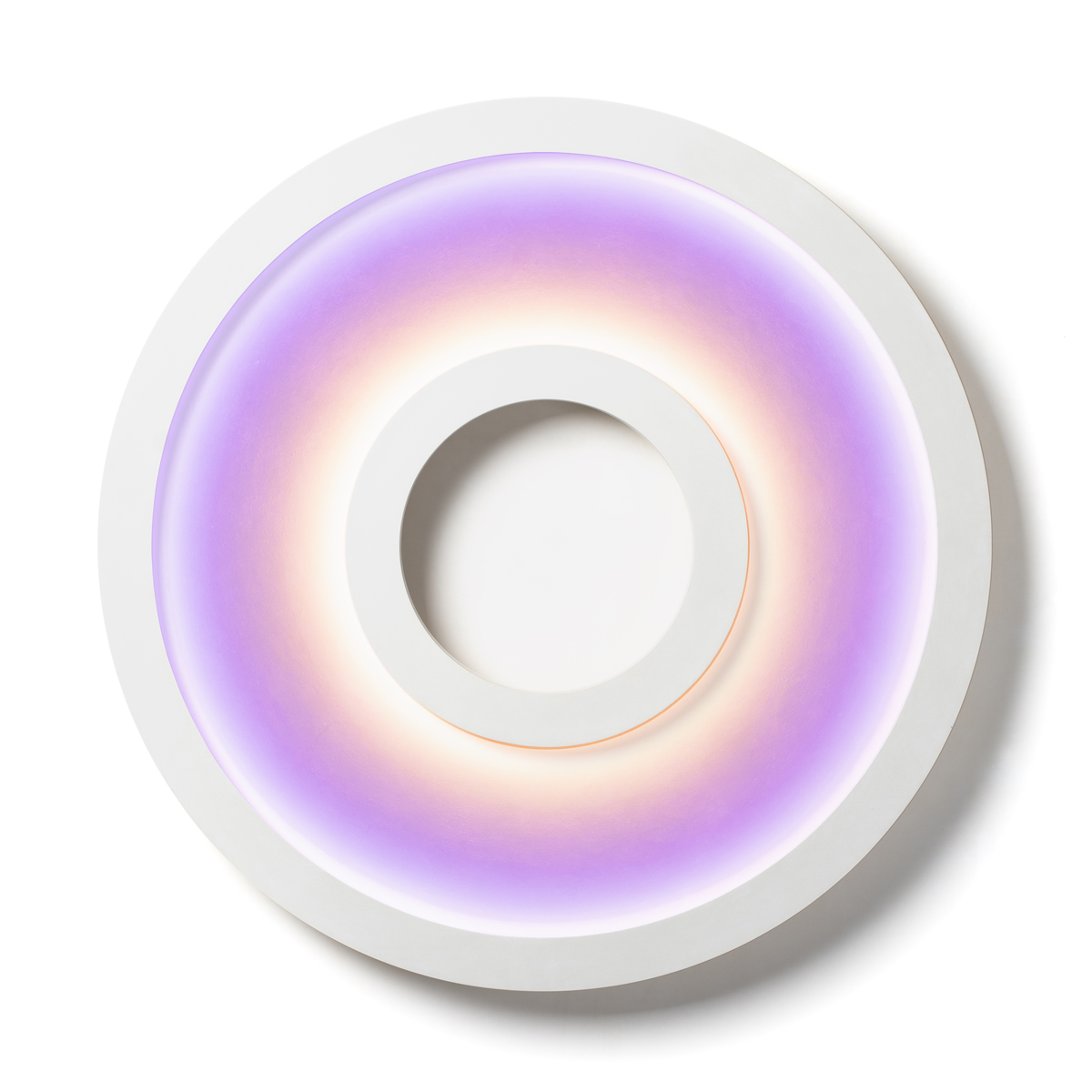
Hand patinated plaster, LEDs, metal
20 + 4 AP + one prototype
65 cm x 5,5 cm
Download a comprehensive PDF on this artwork
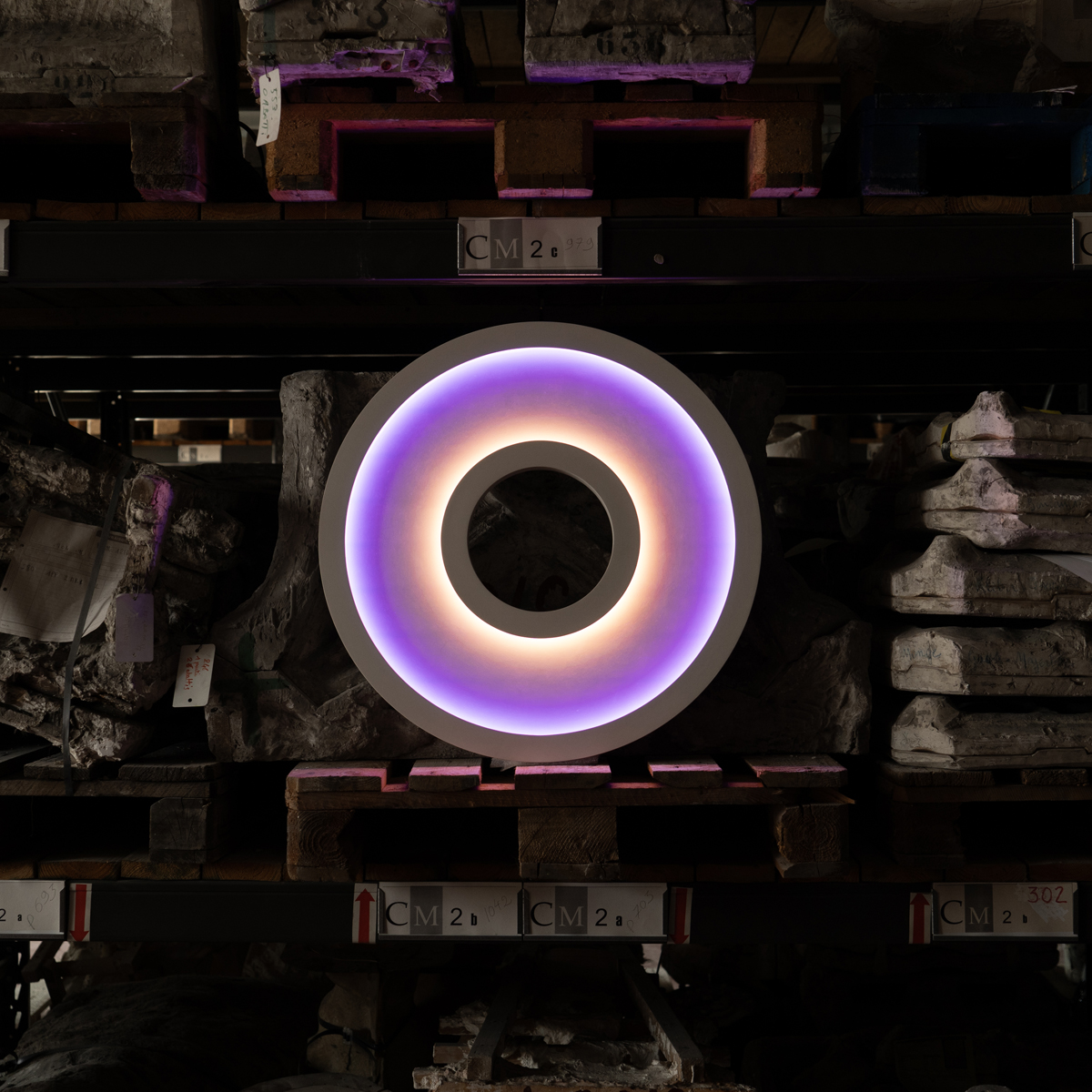
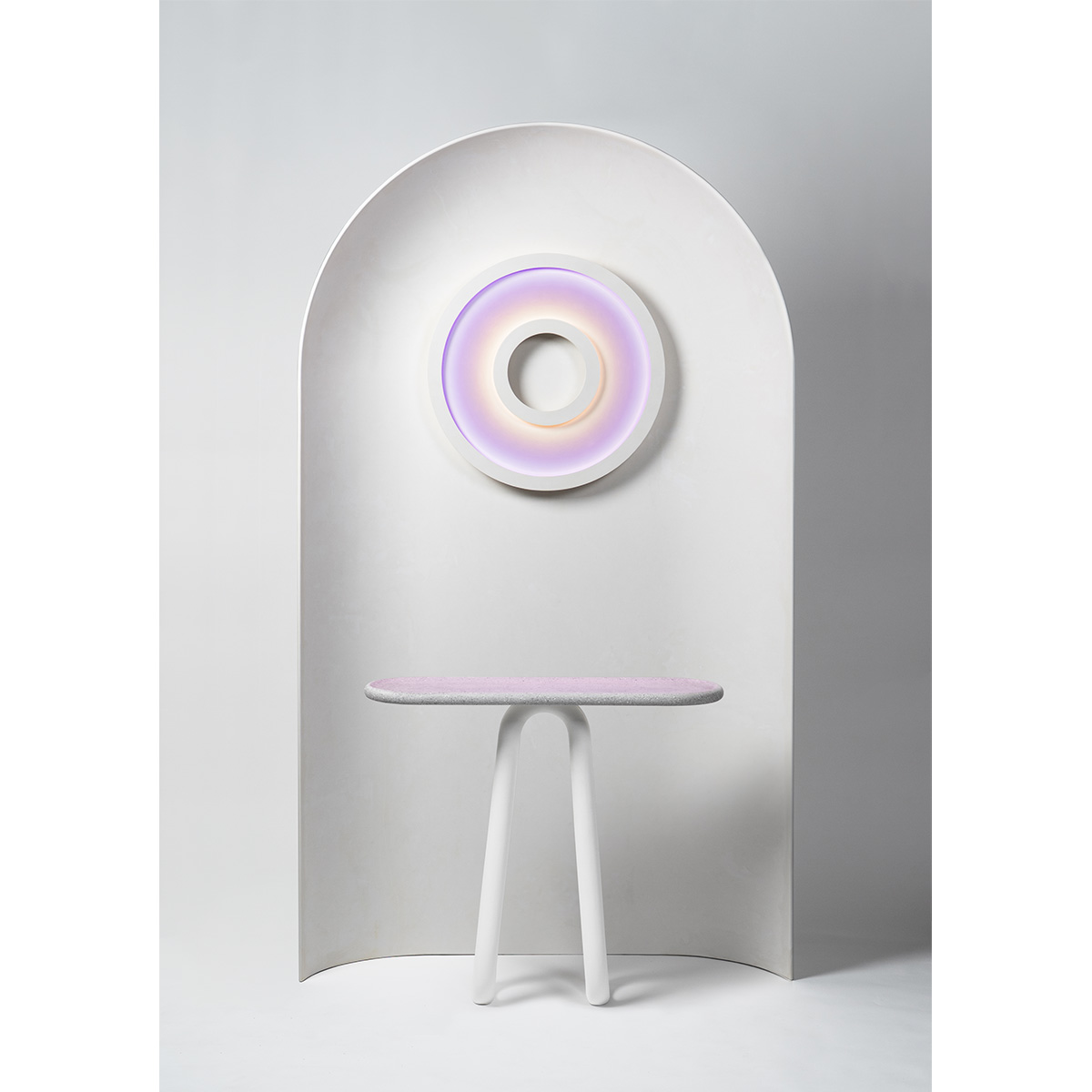
With Oculus Mirabilis, Philippe Cramer explores the relationship between light, time, and perception through a sculpture whose appearance continuously evolves over a twenty-four-hour cycle. Conceived around the circadian rhythm, the work unfolds as a slow chromatic choreography in which color, intensity, and atmosphere gradually transform throughout the day. Rather than merely occupying space, the sculpture inhabits duration, making time itself a material component of the work.
Its circular form draws upon one of humanity’s oldest symbolic archetypes. Across cultures, the circle has represented eternity, cosmic order, and cyclical existence. Inspired by Ancient Egyptian beliefs surrounding the daily death and rebirth of the sun, Oculus Mirabilis evokes the symbolism of the Ouroboros and the notion of perpetual renewal. Each chromatic cycle eventually returns to its point of origin, transforming repetition into regeneration.
The work situates Philippe Cramer within a lineage of artists who have employed light as a primary material, from Dan Flavin and James Turrell to Olafur Eliasson. It also resonates with the Californian Light and Spacemovement, whose artists explored perception through light, color, and atmosphere. Yet unlike many of these precedents, Oculus Mirabilis retains a strong sculptural presence. Light does not replace matter; it animates it. Handmade in fine plaster and produced in collaboration with the master artisans of the GrandPalaisRmn Plaster Cast Workshop in Paris, the work bridges traditional craftsmanship and contemporary technology.
Rather than representing time, Oculus Mirabilis performs it. Its continuously evolving chromatic cycle transforms temporality into a lived experience, inviting viewers to slow their gaze and become aware of the rhythms that govern both nature and human existence. Positioned between sculpture, ritual object, and luminous phenomenon, the work proposes a contemporary meditation on renewal, perception, and the cyclical nature of life.
This new variation of Oculus Mirabilis I, (2021) is co-edited by Philippe Cramer and La Maison using the expertise of the best craftswomen and craftsmen of the Plaster Cast Workshop of the GrandPalaisRmn, a historic workshop originating from the ateliers du Louvre in Paris.
This new artwork was first presented at the Grand Palais in Paris during the biennale Révélations by GrandPalaisRmnAteliers.
Photography © Fanch Le Boch